The Social Connection

The smart phone is becoming a part of everyday life. As millenials, we practically grew up this way. I remember spending hours online as a child. First, on my favorite artists’ message boards, then Xanga, AOL Instant Messenger, and MySpace. Today, my Instagram, Twitter, Facebook, LinkedIn, Pinterest and Tumblr are all found right in my hands – on my iPhone. According to adweek.com, 80% of millennials use social media “several times a day”.

Sure, it’s fun and entertaining and smart phones have made everything convenient for us. But I also understand the importance of mobile marketing and a social media presence for marketing and business.
social

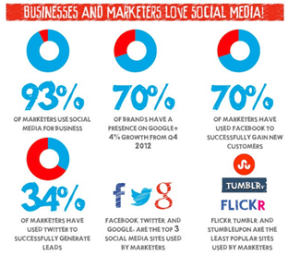
93% of marketers use social media for business (businessinsider.com). I presented a social media presentation at one of my former internships because of my passion for this topic.
social

I saw its importance first hand while in undergrad. We used social media for EVERYTHING. Whether it was promoting events on campus, helping out a fellow classmate entrepreneur or just spreading the word about campus news. Many people use it for fun, but marketers are finding ways to target their audiences better than ever before. Social Media isn’t just a fad. It will be here for the next several years. I wonder what will be “new” on the social scene in 3 years.

Mobile Marketing is Dominating

Everyone is on their smartphone. Walking down the street, driving, at dinner, even at the office. If your website isn’t mobile friendly, you’re probably missing out. You don’t want to become irrelevant.

There’s a reason why companies are spending millions on mobile marketing; mobile marketing is actually predicted to hit $65 billion by 2019 in the US. Screen sizes and quality of phones probably has a lot to do with the popularity of mobile marketing. Video ads are becoming more and more popular. They’re more engaging and allows for more brand exposure beyond pictures and words.

mobile

There’s an app for that. There’s literally almost an app for anything you can think of. If it hasn’t been created yet – believe me, it’s on its way. Apps also are a place where ads can show up helping brands to gain more exposure. Having an app for your business is also great for the on-the-go consumer. It gives people easy access to your company and what you have to offer.

Mobile ads also offer a great way to keep your audience engaged. Take a look at just one of Coca-Cola’s mobile ad campaigns:

Interactive ads have been found to be more effective in driving sales and app installations.

Behavioral data has also helped marketers target their audience more efficiently. You probably have noticed after you’ve searched for something or been on a particular site, an ad will pop up of a similar site you’ve searched. There’s also technology that can target you by your location. Being mobiley present can help increase your audience and/or sales.

Mobile is the future. Mobile is now.

Read more about mobile marketing here:

9 Mobile Marketing Trends Dominating 2015

Blogging – Is it Just Trendy?

Blogging isn’t just a hobby for some, it’s a job. Today, it seems that everyone has a blog and there’s a blog about anything.

blog

The term ‘web-log’ was coined by Jorn Barger, editor of Robot Wisdom in 1997 in an attempt to describe the daily list of links that ‘logged’ his web travels. Two years later, Peter Merholz split the word in two to form we blog in the sidebar of his blog. It didn’t take long for Evan Williams at Pyra Labs to use ‘blog’ as both a noun and a verb, before creating the term ‘blogger’ in connection with Pyra Labs’ Blogger product. (from the history of the blog) Blogging is said to have spread starting from 1999.

One of the most popular blogging platforms, Blogger.com was created in 1999 and bought from Google in 2003.

How did it become popular?

Probably because people of all ages can post whatever they like. There are no particular rules or standards to a blog. You have free will to publish whatever you like. It’s  a way to start a conversation and even promote, as we can see today. In a matter of seconds, your post can be seen by millions and you can share it with all of your friends on social media.

People usually blog about things they’re passionate about. Not all bloggers wanted to be authors/writers. They just found an outlet to express themselves. But some people blog for business (or businesses blog). A blog can help to market a business in another way than the norm. It can allow you/your business to connect with consumers, help to tell your brand story or even educate.

Blogs have become lucrative for many, especially those in the fashion world. It takes a lot of work to make a successful blog. In order to monetize it, you will need many views and a lot of content. You can also choose to be on an affiliate list. Here are 9 ways to make your blog popular:

  1. Customize your blog design
  2. Add your blog to blog communities
  3. Write tutorials/teach your audience something
  4. Be a guest author on popular blogs
  5. Give something to download for free
  6. Blog frequently
  7. Trade blog links with other bloggers
  8. Create a Facebook page and promote it
  9. Tweet your posts – broadcast on social media

To read about all of these tips, check out mastermindblogger.com

I think blogging will be around for a long time. As more people are getting a hang of it, there’s no doubt that it won’t be sticking around. Consumer also trust the opinions of their peers a lot more than a company itself. Blogs have taken reviews and branding to another level.

What are some of your favorite blogs?

SEO and Measurement Made Simple

seo

SEO (Search Engine Optimization) may sound intimidating, I must admit. The more I read about it, it seems to get more complicated. But there are plenty of things out there that can help with your SEO needs. Whether you’re a new or seasoned blogger (or web editor), SEO tips and tools are always great to stay on top of.

SEO is the process of maximizing a website’s ‘organic’ (non-paid) visits and sales from search engines. When created your headlines and contents, it’s always great to keep in mind the end users and what they’re looking for, how they’ll search for your content and how you can help them find it.

While you may want to name your post something clever, hearitfb.comsuggests “it helps to try and make your title clever, specific and concise.  Most Search Engines only pick up the first 60 characters (letters, symbols, and numbers) of a post, so keep your title within that length.”

Also, remember to tag your blog posts. This is another way that people can find your page. Search engines will recognize tags and note that they have new content. Updating frequently will increase your chances of being seen.

A Flash or image intro can block an engine’s crawler right at your homepage, lifehacker.com says. If you do use images, be sure to add keyword laden descriptions to your alt attributes.

It may take awhile to get to where you would like to be, it takes patience. If you are producing helpful content, there is always someone who needs it.

seo2

Resources to help with your SEO needs:

http://myseomadesimple.com/local-optimization-package/

http://www.goodkeywords.com/

https://moz.com/beginners-guide-to-seo

https://adwords.google.com/ko/KeywordPlanner

Once you’ve created great content consistently, it’s important to see how you measure and what people like. Check out 19 free social media analytics tools. Don’t let your content go to waste!

The Art of Storytelling

Storytelling can bring your brand to life. Content marketing is becoming one of the most popular ways that brands are getting recognized. It’s so easy to leverage social media or your consumers to help with your marketing strategy. Many brands have caught my attention with their use of storytelling but one is particular has been Hallmark.

Lately, Hallmark has been using real-life people, in a testimonial setting to talk about their loved ones. They aren’t necessarily selling their products by putting them in the consumers’ faces, but rather they’re evoking that emotional chord that makes you think about the one(s) you love, and also it helps Hallmark stick out in your mind afterwards. They call it a social experiment.


A few months ago, the company had a series of commercials during Valentine’s Day featuring different couples. One video, featuring a lesbian couple, was definitely a topic of conversation.

During Mother’s Day, the series of #PutYourHeartToPaper featured a diverse group of people talking about their moms. The speakers didn’t know that their mother’s were there listening. This particular video has 16k views at this time and has been on YouTube for about a week now. I definitely encourage you’ll to take a look at all of the videos Hallmark has been producing. Their use of storytelling truly helps to connect consumers to their brand: http://www.hallmark.com/commercials/

Is My Cell Phone Really Mine?

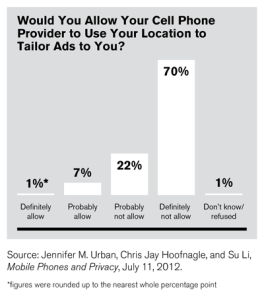
It doesn’t seem like it. With the way technology is improving, it’s getting easier for outsiders to get your data. Almost every site and app wants to know your location. At what cost does this cost to you?

cell phone

The majority of mobile phone users surveyed for a report by the University of California, Berkeley, said that they didn’t like the idea of other people accessing the information stored on their mobile phones. But many people already provide access to their information such as their location on their phones to carriers and apps without even knowing.

The truth is smart phones can track your every move. According to Apple, the feature helps your device and third party apps, like any maps you might use on your phone, to use information from cellular, WiFi, and GPS to determine your location.

Marketers want to find more ways to keep track of consumers. If you’re close to a particular store, they want to be able to have ads that pop up on your mobile device and get you to come in. “All of this information about who you are, where you go, what locations you frequent, those are being sold to advertising firms, large corporations that might be interested in your personal data,” explained attorney Rob Sanders.

There are times when location services can be good; while using GPS, the find my iPhone feature, or for apps that help you find food, stores or coupons in your area.

Personally, it doesn’t bother me because I’m always using my GPS or need to find places near me. I haven’t come across being directly targeted while in a store, yet. The major concern would be when outsiders are collecting personal data such as private information or where you frequent.

It would be great if we could know exactly what data is being collected and also give permission to be tracked (other than by location). The FCC is also trying to get mobile privacy regulated but they haven’t quite come to a decision yet.

When downloading apps or posting on social media, it is also a good idea to take a look at their privacy policy so that you’re aware of what data they’re collecting from you.

If you don’t want to be tracked based on location, there is something that you can do on your smart phone as well:
-Go to settings
-Privacy
-Location services
-System services
-Frequent locations

There you can find every place you’ve been in detail. To turn it off, slide it to “off.”


To read more, check out:

Smart Phones Tracking Your Every Move

Microsoft Disables Do Not Track

Group asks FCC to make websites honor do-not-track requests


Social Media and College Sports Recruiting

The Social Media landscape continues to change even in sports, where many sports agencies and teams are looking to grow a bigger social media presence than their counterparts. Social media has been an integrative part of recruiting in college football, where many schools design graphics for committed players in which they post to help promote their new recruits.

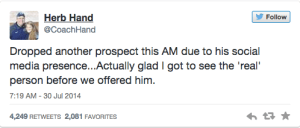
Social Media has changed the way schools recruit players, last week at SEC Media days Arkansas’ Head Football Coach Brett Bielema stated that he has turned down players based on what they are posting on social media.

“For males and females, athletes and nerds, the theme is the same – persona gleaned from your social media site matters.” –Newsmedia

recruit

Recruitlook.com

While social media has its benefits it has its downfalls too. Many schools across the SEC teach players that what you post you are not only representing yourself but also your perspective school, so it’s important to be aware before you post or tweet. Twitter seems to be the most popular place to communicate with perspective players, so they’re Twitter pages should be in shape.

By providing a constant stream of graphics, videos and old-fashioned/newfangled conversation, this might peak a player’s interest. Some programs have also garnered up mobile apps to help with recruiting. Arizona State is set to come out with an app similar to Pinterest.

“Social media is 24/7/365. If a kid wakes up at 3 a.m. and scrolls through his phone, finds something and clicks on it, then we’re recruiting while we’re sleeping.” -Matt Dudek, director of on-campus recruiting for Arizona State.

recruit2

Social media has proved to be a great research tool for coaches and those on staff at these schools. They can determine a relationship just by a player’s social media account. They can examine who retweets the player and how they communicate publicly. This is another way that staff can tailor promotions to the different players they are recruiting. “It costs little beyond a few minutes of labor to create an image of a recruit wearing a team’s uniform. That image can then be attached by a coach to an e-mail or a Twitter or Instagram direct message. If the player likes it, he’ll probably end up posting it for everyone to see.”-Si.com This can be great for the player and the school.

Social media is taking over in almost every industry. It’s a very effective way to market. If you aren’t a part of it, you’ll be left behind. It’s going to be interesting to see how social media will help college football continue to make history.